

TPD Vape Compliance: What You Need to Know About EU Vape Regulations
Leave a message
The EU Tobacco Products Directive (TPD), officially known as Directive 2014/40/EU, sets specific requirements for electronic cigarettes and refill containers sold as consumer products in the European Union. These requirements cover product specifications, nicotine content, safety, packaging, labeling, and product notification.
But what exactly does TPD compliance mean for a vape product?
What Is TPD?
The Tobacco Products Directive is an EU regulatory framework covering tobacco and related products, including electronic cigarettes.
For e-cigarettes, the main requirements are set out in Article 20. The rules are designed to establish common requirements for products placed on the EU market, with a focus on product safety, quality, consumer information, and market oversight.
For manufacturers and importers, this means that developing a vape for the European market involves more than simply meeting consumer preferences. Product specifications and compliance requirements need to be considered from the beginning of the development process.
What Are the Main TPD Requirements for Vapes?
TPD compliance covers several areas. The most commonly discussed requirements include nicotine concentration and e-liquid capacity, but the regulations go considerably further.
1. Maximum Nicotine Concentration
One of the best-known TPD requirements is the limit on nicotine concentration.
Under Article 20, nicotine-containing liquid placed on the EU market must not contain more than 20mg/ml of nicotine.
This means that a vape product designed for the EU market cannot simply use any nicotine strength available in other markets. The formulation needs to be developed according to the applicable EU requirements.
For manufacturers, this makes nicotine concentration an important part of product planning, testing, labeling, and documentation.
2. E-Liquid Capacity
TPD also establishes limits for the amount of nicotine-containing liquid that can be contained in certain electronic cigarettes.
For disposable electronic cigarettes and single-use cartridges, cartridges or tanks must not exceed 2ml. Dedicated refill containers have a separate maximum volume of 10ml.
This is why 2ml has become an important specification for many disposable and single-use vape products intended for the European market.
It is worth noting that the 2ml requirement applies to the relevant cartridge or tank configuration; it should not simply be treated as a universal capacity rule for every type of vape product.
3. Product Safety and Quality
TPD compliance is not just about numbers printed on the packaging.
The Directive also includes requirements related to product safety and quality. Electronic cigarettes and refill containers need to be designed with protection against issues such as breakage and leakage, while relevant products must incorporate child-resistant and tamper-resistant features.
The Directive also requires electronic cigarettes to deliver nicotine doses consistently under normal conditions of use.
For manufacturers, this means that hardware design, e-liquid formulation, heating components, and production processes all become part of the broader compliance picture.
4. Ingredients and Product Information
TPD requirements also extend to the contents of the product.
Manufacturers and importers are required to provide information relating to ingredients and emissions, as well as toxicological data and information concerning nicotine doses and uptake under normal or reasonably foreseeable conditions.
The Directive also requires the use of ingredients of high purity and sets requirements concerning ingredients used in nicotine-containing liquids.
This is one reason why regulatory preparation can involve considerably more technical information than the specifications normally shown on a product page.
Packaging and Labeling Are Part of Compliance
A vape product can meet its technical specifications and still require additional work before it is ready for the EU market.
TPD establishes specific requirements for packaging and consumer information. Packaging must include information such as the ingredients, nicotine content, delivery per dose, batch information, and required health warnings. Products must also be accompanied by a leaflet containing relevant instructions and information.
For manufacturers and importers, packaging therefore needs to be considered alongside the product itself.
A compliant product is not simply a compliant device. The product, packaging, documentation, and market preparation all need to work together.
Product Notification: Another Important Part of the Process
Another part of TPD compliance that is sometimes overlooked is product notification.
Before electronic cigarettes and refill containers are placed on the EU market, manufacturers and importers are required to submit product information to the competent authorities of the relevant Member States. Article 20 specifies an electronic notification process, generally requiring notification six months before the intended placing on the market.
The information can include:
- Manufacturer and importer details
- Product ingredients
- Emissions
- Toxicological information
- Nicotine dose and uptake
- Product components
- Production process
- Quality and safety declarations
The European Commission also identifies a standardized electronic notification format for e-cigarettes and refill containers.
This highlights an important point:
TPD compliance is a process, not a single product specification.
Why Does TPD Compliance Matter to Vape Businesses?
For European distributors and retailers, compliance is an important part of evaluating a new vape product.
A product developed for the EU market needs to be considered from several perspectives:
Product specifications
Does the product meet applicable limits for nicotine concentration and capacity?
Product safety
Does the device and its components meet the relevant safety and quality requirements?
Packaging and labeling
Does the packaging provide the required information and warnings?
Documentation
Is the necessary technical and regulatory information available?
Product notification
Has the appropriate notification process been completed for the relevant market?
Looking at all of these areas can give distributors a more complete picture of whether a product is prepared for the European market.
TPD Compliance Is More Than a "2ml + 20mg" Label
The 2ml capacity and 20mg/ml nicotine limit are two of the most recognizable TPD requirements, but they are only part of the overall framework.
A vape product's compliance status can also depend on its construction, ingredients, safety characteristics, packaging, labeling, documentation, notification, and the specific requirements applicable in the Member State where it is sold.
For this reason, manufacturers should avoid treating TPD compliance as simply a specification checklist.
Instead, it should be considered throughout the entire product development and market-entry process.
How Vabeen Mini Fits Into the TPD Framework
With a clearer understanding of the requirements, it becomes easier to see how products are developed for the European market.
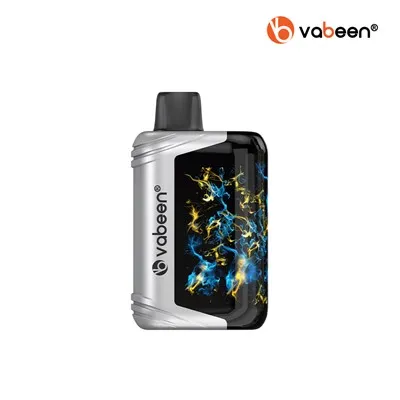
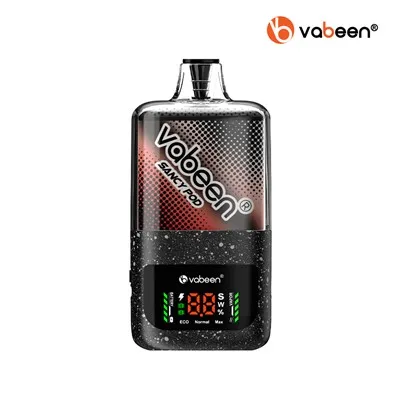
Vabeen Mini is one example of a compact vape designed with the European market in mind.
Its EU version features:
- 2ml e-liquid capacity
- 20mg/ml nicotine strength
- Up to 600 puffs
- 400mAh battery
- Smart screen
- Turbo Mode
- 65.1 × 36 × 18mm compact design

The combination of 2ml capacity and 20mg/ml nicotine strength corresponds to two key limits established under Article 20 of the TPD.
Beyond these specifications, Vabeen Mini is designed as a compact product for the European market, combining a small form factor with features such as a smart screen, mesh coil, and Turbo Mode.
For distributors and retailers looking for products developed with EU requirements in mind, understanding the regulatory framework is an important first step-and choosing the right product comes next.
Vabeen Mini brings together a TPD-oriented specification and a compact, modern design for the European vape market.